THE ROAD TO RETAINING REAL WEALTH
Redefining National Development Through Spatial Freedom and a Leisure Economy in India
INDIAECONOMYFEATURED
7/6/20266 min read
The Lifestyle-Driven Brain Drain and the Illusion of Luxury
For decades, the standard public policy response to India’s "Brain Drain" has relied entirely on traditional financial metrics: easing tax slabs, streamlining business compliance, or tweaking corporate incentives. Yet, a massive demographic of high-earning wealth creators—AI engineers, content creators, algorithmic stock traders, cryptocurrency experts, and direct-to-consumer founders—continues to migrate out of the country in waves. This new generation of professionals does not leave India to seek higher salaries; they leave because they are trapped in a systemic bottleneck where a high bank balance fails to buy a basic quality of life.
In a hyper-competitive hustle culture governed by a "work until you die" mentality, relaxation is culturally dismissed as idleness, and unstructured public spaces are virtually non-existent. When viewed with absolute rationality, an elite professional earning ten lakh rupees a month shares an almost identical physical reality with an employee earning one lakh. They breathe the same polluted urban air, get stranded in the same waterlogged monsoon traffic jams, and face the exact same crowded corporate spaces.
Because India completely lacks a legal, administrative category for low-impact, independent outdoor recreation, the domestic market has substituted true lifestyle freedom with highly inflated, artificial consumer traps. Wealthy citizens are forced to buy an illusion of luxury through hyper-inflated international school fees, steep automotive customs duties, and expensive fine dining. This consumption bottleneck leaves excess capital with nowhere to go. Unable to be spent on experiential relaxation, this idle wealth flows directly into speculative real estate, inflating housing bubbles, pricing out the middle class, and creating miles of empty concrete "ghost flats."
The modern migration of high earners to hubs like Dubai is driven by a desire to buy back personal autonomy. In these regions, a wealth creator can legally buy a premium jet ski or yacht, park it at a public marina, and head out onto the water at 8:00 PM without facing bureaucratic harassment, local mafias, or police suspicion. If India wishes to retain its brightest minds and deepest pools of liquid capital, it must look beyond superficial consumerism and legally architect spaces for independent, high-value leisure.
Gated Primitive Campsites: Democratizing the Land Domain
The solution to structured outdoor freedom begins on land, directly addressing the reckless "might is right" mindset often displayed by urban drivers who create public nuisances on fragile rural tracks. Instead of implementing lazy, blanket bans that choke off domestic exploration, the state must regularize and channel market demand by engineering "Primitive Drive-In Campsites" outside core forest lines. This model can be rapidly deployed by district administrations in under-developed, high-potential regions such as Shravasti, Lakhimpur Kheri, Sonbhadra, Rajmahal, and Pen.
+-----------------------------------------------------------------------+
│ REGULATED PUBLIC ECO-CAMP │
+------------------------------------------------────────────────-------+
│ │
│ [ Entry Gate ] ───► Managed by Local Village Panchayat │
│ - Digital plastic inventory count log │
│ - Collect fully refundable ₹500 cash deposit │
│ │
│ [ Central Core ] ──► Solar-powered high-vacuum Bio-Toilet blocks │
│ (Eliminates water pollution & open defecation) │
│ │
│ [ Primitive Bays ] ─► "Bring Your Own Everything" Rule: │
│ - Mandatory portable solar/lithium power │
│ - Mandatory raised, closed metal fire pits │
│ │
+-----------------------------------------------------------------------+
By stripping away luxury resort frills and providing only clean, functional bio-toilets, the state solves 90% of the ecological crises associated with public camping. To eliminate littering, the entry gate operates a strict plastic count log. A camper's packaged plastics are cataloged upon entry against their vehicle registration, and a refundable security deposit is collected. If they return with their empty trash matching the entry log, the deposit is returned; if they litter, the money is forfeited to fund local clean-up labor, and the vehicle is flagged on the central transport database. This "Bring Your Own Everything" framework forces personal responsibility, maintains absolute silence, and keeps building costs low enough to make the model highly scalable for local village Panchayats.
The Marine Scarcity Model: Turn Exclusivity Into Trust Funds
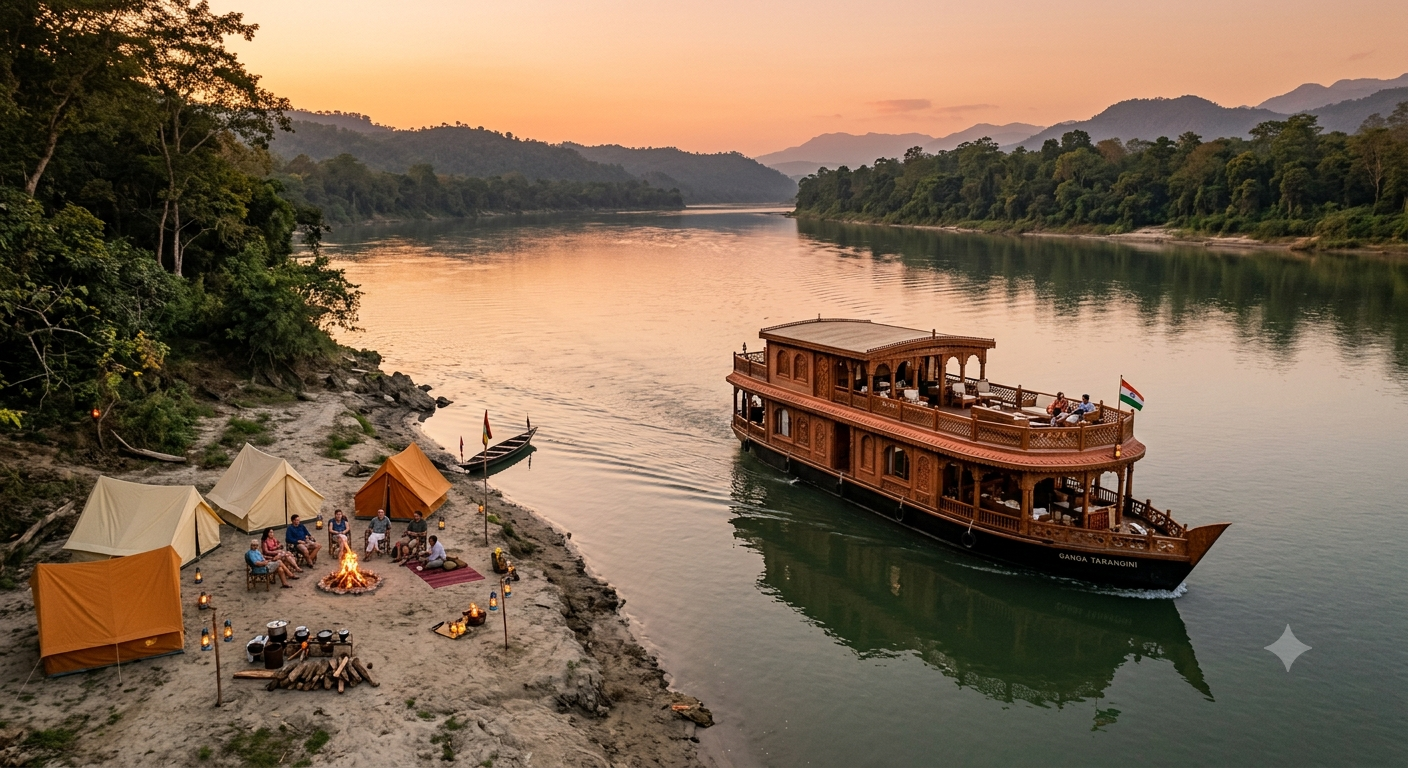
To unlock true high-value relaxation while offering ironclad protection to river ecosystems, the state must institute a formal "Non-Commercial Private Leisure Craft" (NCPLC) registry for inland waterways. To ensure that rivers like the Ganges, Ken, Betwa, or Tungabhadra are never suffocated by a chaotic mass of watercraft, access must be regulated through extreme market-driven filters and strict spatial-temporal zoning.
First, all private recreational vessels must be subjected to a strict Zero-EMI, full-cash upfront purchase mandate in white money, paired with a non-negotiable Anti-Rental Law. To prevent corporate tourism apps from commercializing the waterways, a digital passenger manifest must be submitted prior to launch, and the primary registered owner must be physically present on board during operation. Violating this rule results in the permanent cancellation of the license and the immediate public auction of the permit slot.
Second, the state must implement a District-Cluster Quota, placing a hard cap on the total number of private active hulls allowed per region. By restricting supply, the permit transitions into a highly prized, transferable status asset—the aquatic equivalent of an exclusive Delhi or Dadar Gymkhana membership. When an owner wishes to exit the market, they must trade their permit on the open market, triggering a steep 20–30% Government Transfer Tax on the transaction.
┌───────────────────────────────┐ ┌───────────────────────────────┐
│ ELITE PRESTIGE FUNDING │ │ RURAL SYSTEM OUTCOME │
├───────────────────────────────┤ ├───────────────────────────────┤
│ • High upfront cash capex │ │ • High-wage local employment │
│ • Marina mooring & pump fees │ ─────► │ • Pure zero-pollution rivers │
│ • 20-30% license transfer tax │ │ • Panchayat infrastructure │
│ • Premium marine insurance │ │ funding for public sites │
└───────────────────────────────┘ └───────────────────────────────┘
This scarcity engine guarantees near-perfect compliance. Because the elite owners are highly educated stakeholders who have invested massive capital to enter an exclusive club, they will self-police to keep their ecosystem pristine. They will gladly adhere to the strict environmental and security guardrails: launching only after the 8:00 PM commercial tourism shutdown, using integrated solar-lithium systems for silent power, and honoring a legally enforced night-time Cruise Ban between 11:00 PM and 5:00 AM. This midnight freeze leaves the water completely silent for nesting marine life and ensures that any vessel moving on radar at 2:00 AM is instantly flagged by security patrols as an illegal sand miner or poacher, keeping the resting owner completely undisturbed.
The Closed-Loop Zero Pollution Mandate
Sustained luxury cannot exist alongside environmental compromise. To prevent a single drop of human or chemical waste from touching the river, every registered NCPLC must structurally feature an integrated vacuum-flush toilet and a sealed kitchen greywater holding tank, with absolutely zero underwater discharge valves.
[ Evening Cruise Starts ] ──► Launch after 8:00 PM Commercial Shutdown
│
▼
[ Overnight Anchor ] ──► Silent Solar Power; Closed Kitchen Induction Cook;
Strict 11:00 PM - 5:00 AM No-Move Cruise Ban
│
▼
[ Morning Return ] ──► Mandatory Moor-Side High-Vacuum Pump Out;
Empty Grey & Blackwater Tanks into Onshore Sewage
When a private boat returns from its overnight stroll in the water, it is legally mandated to pull up to a specialized moor-side high-vacuum suction dock at a gated, government-managed premium marina. The boat's blackwater and greywater tanks are completely evacuated into an onshore processing unit, and the transaction is digitally logged on a centralized app. A boat is blocked from logging out of the marina until its pump-out log is validated, completely neutralizing the environmental footprint of luxury travel.
The Macroeconomic Flywheel: Launching a Global Export Engine
The implementation of this high-premium, strictly regulated outdoor framework does not merely create a recreational escape; it acts as a massive industrial multiplier that triggers a self-sustaining macroeconomic flywheel across India. Because the baseline entry cost of the vessel is established at an ultra-high premium level (a minimum of ₹1.5 Crores cash), it completely justifies value-proportionate taxation, premium marine insurance rates, and high marina maintenance fees that can be aggressively harvested to fund public goods.
This ecosystem will organically invent a brand-new, highly specialized class of domestic, prestigious professions. Local rural youth who previously faced seasonal agricultural displacement will be upskilled and certified as Inland River Captains, skilled River-Leisure Culinary Chefs capable of executing high-end induction-based regional cooking under the stars, and expert Marina Eco-Technicians managing complex solar-lithium grids and vacuum suction hardware. This directly shifts wealth from urban elites straight into rural households, completely bypassing corporate middlemen.
Furthermore, the demand for specialized, boat-worthy assets will spark entirely new domestic manufacturing sectors. Industrial units will scale up the production of shatterproof, non-slip marine utensils, marine-grade grade-316 stainless steel fasteners, and certified LED maritime navigation lighting. The intense desire for unique status symbols among the elite will birth a thriving domestic Marine Architecture and Yacht Interior Design industry, employing India’s finest industrial engineers and creative artists who would otherwise migrate abroad.
┌───────────────────────────────────────────────────────────────────────────┐
│ THE CLOSED-LOOP MACROECONOMIC ENGINE │
├───────────────────────────────────────────────────────────────────────────┤
│ │
│ [ HIGH-END DEMAND ] │
│ Tech Founders, AI Experts, Traders seek premium experiential leisure. │
│ │ │
│ ▼ │
│ [ INDUSTRIAL SCALE-UP ] │
│ Domestic shipyards manufacture specialized solar-electric boats, │
│ marine materials, and high-end non-slip utility ware. │
│ │ │
│ ▼ │
│ [ GLOBAL EXPORT EDGE ] │
│ High-quality, competitive Indian labor structures allow shipyards to │
│ capture global custom yacht and green marine tech export orders. │
│ │ │
│ ▼ │
│ [ SOCIAL REINVESTMENT ] │
│ Premium marina fees, eco-taxes, and license transfer cesses directly │
│ fund public "Toilets-Only" campsites for regular citizens. │
│ │
└───────────────────────────────────────────────────────────────────────────┘
Ultimately, because India possesses a highly skilled engineering workforce combined with a hyper-competitive cost structure, this domestic incubation will quickly transform into a global export powerhouse. International buyers from Europe, the Middle East, and the Mediterranean—facing increasingly strict carbon emission and waste disposal laws—will actively route their custom yacht orders to Indian shipyards, which will already be global leaders in building 100% zero-pollution, zero-emission green vessels by default.
By building a bridge of regulated scarcity, strict temporal zoning, and mandatory dockside waste evacuation, India can finally transition away from a toxic, binary culture of lawless environmental destruction versus total bureaucratic lockout. It creates a self-cleaning, self-funding economic model that gives wealth creators an inspiring reason to stay, transforms elite luxury into an engine for rural equity, and preserves the nation's pristine ecosystems for generations to come.